|
|
|
|
|
|
|
|
What are they? |
How are they named? | If we
know the formula | If we know the name
|
Examples | Exercises
|
|
|
|
What are they? |
|
They are compounds formed by a nonmetal and oxygen, in
which the oxygen has an oxidation number –2.
|
|
|
How are they named?
|
|
For its nomenclature we use
Stoichiometric nomenclature: it is formed by two words. The first word is
the name of the nonmetal with a Greek prefix that shows us the number of atoms
of nonmetal, the second word is the name "oxide" with a Greek prefix that shows
us the number of atoms of oxygen.
The Greek prefixes are:
| 1 |
2 |
3 |
4 |
5 |
6 |
7 |
8 |
9 |
10 |
11 |
12 |
| mono- |
di- |
tri- |
tetra- |
penta- |
hexa- |
hepta- |
octa- |
nona- |
deca- |
undeca- |
dodeca- |
Prefix-NONMETAL prefix-oxide
The prefix mono- is used
only before "oxide" and when the ratio is 1:1.
The IUPAC also accepts Stock´s nomenclature for these oxides, though it is
better to use the stoichiometric nomenclature when all the atoms are nonmetals
and Stock´s nomenclature when there are metal and non metal atoms.
|

|
|
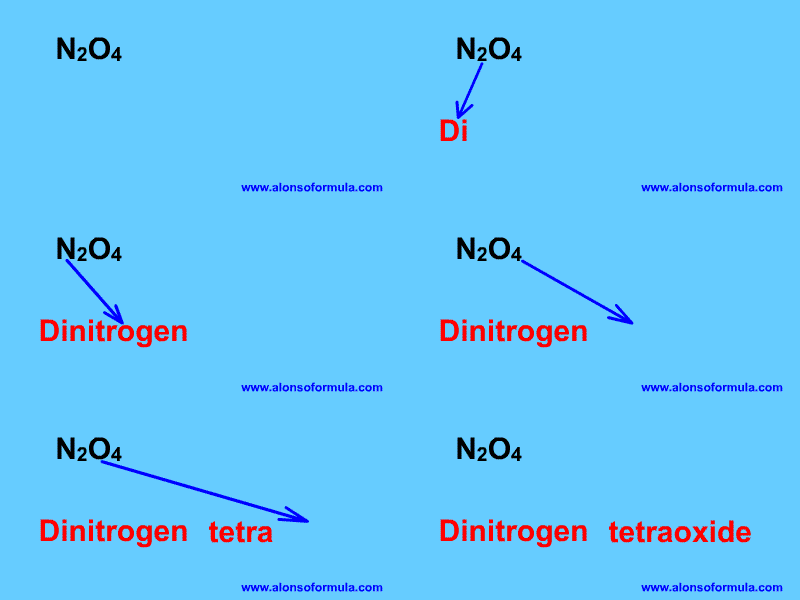
If we know the formula |
|
In the formula: Name
of the nonmetallic element with a Greek prefix that shows us the number of
atoms, followed by oxide with a Greek prefix that shows us the number of atoms
of oxygen.
|
|
|
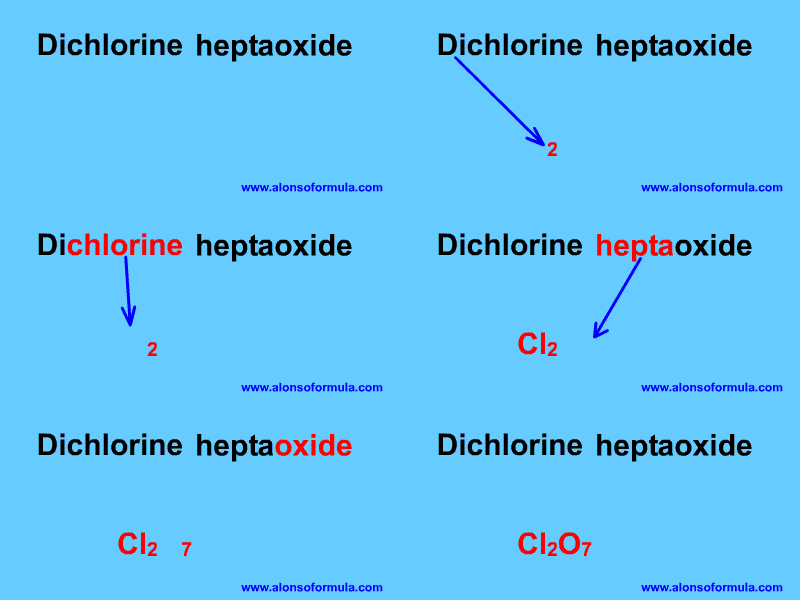
If we know the name |
|
In the name: The first word says the first element
in the formula, the prefix indicates the subscript of the element in the
formula, "oxide" indicates that the second element is the oxygen, and the prefix
indicates the subscript of the oxygen in the formula.
|
|
|
Examples
|
|
| |
Stoichiometric nomenclature |
| N2O |
Dinitrogen
oxide |
| NO |
Nitrogen
monoxide |
| N2O3 |
Dinitrogen
trioxide |
| CO |
Carbon
monoxide |
| CO2 |
Carbon
dioxide |
|
|
|
Exercises
|
|
In Formulae you have an exercise to write the names of these substances
and to check your results. You also have the answer to the exercise.
In Names you have an exercise to write the formulae for these substances
and to check your results. You have to introduce the formulae without
subscripts, for example for water = H2O. You also have the answer to the
exercise.
|
|
|
|
|
|
|
Home |
Introduction |
Oxidation number | Mechanics |
Kind of substances |
Elementary substances |
Metal oxides |
Nonmetal oxides | Metal-nonmetal compounds
| Nonmetal-nonmetal compounds |
Metal hydrides |
Hydracids | H with nonmetal |
Hydroxides | Oxyacids
| Oxysalts |
Acid salts |
Exercises | Periodic Table |
Links
Author:
Optimized for resolution of 1024 x 768
|
|
|
|
|
|
|
|
|